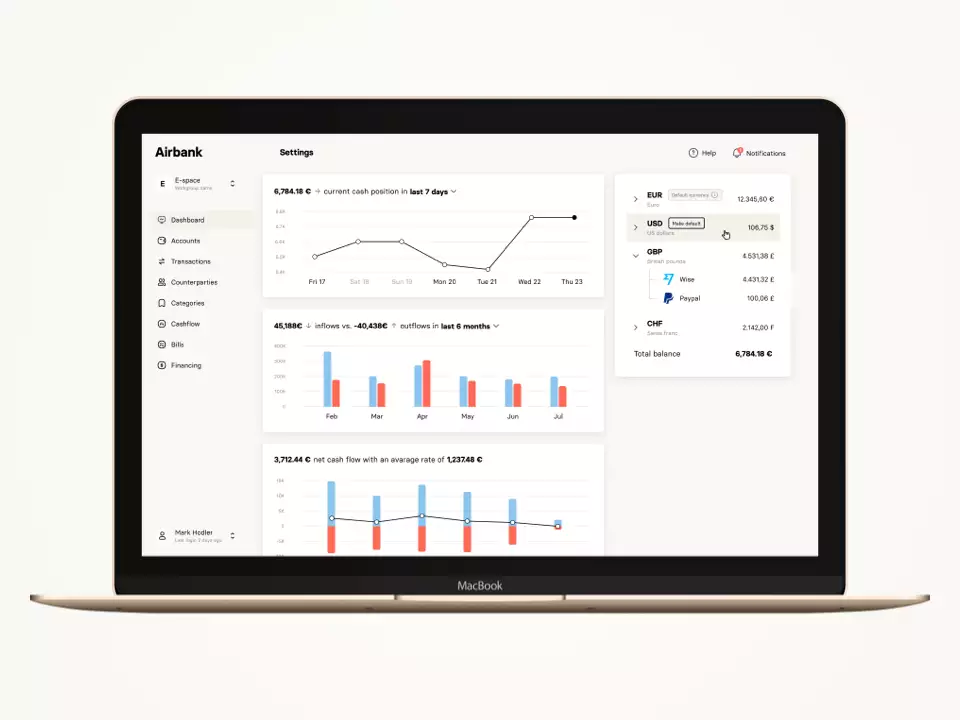
Arbour financial investment platform
A neutral investment platform for confident decisions
Arbour is a digital platform designed to connect financial professionals through structured, data driven investment opportunities. It replaces fragmented tools and reduces the need for time consuming personal meetings.
The goal was to design a matching system that supports fair comparison of investment products while avoiding ratings or biased recommendations. The platform focuses on clarity, trust, and up to date information.
The primary users are portfolio managers managing funds and institutional finance professionals responsible for evaluating and engaging with investment opportunities.

Design Strategy
- Structured information architecture with tailored user flows for two user groups accessing the same data from different profiles
- Clear flows covering exploration, comparison, and engagement including requests and communication
- Assumption based user profiles defined to validate decisions early in the process
- Design principles centered on unbiased advisory, minimalism, clarity, and consistently current information
Research & Discovery
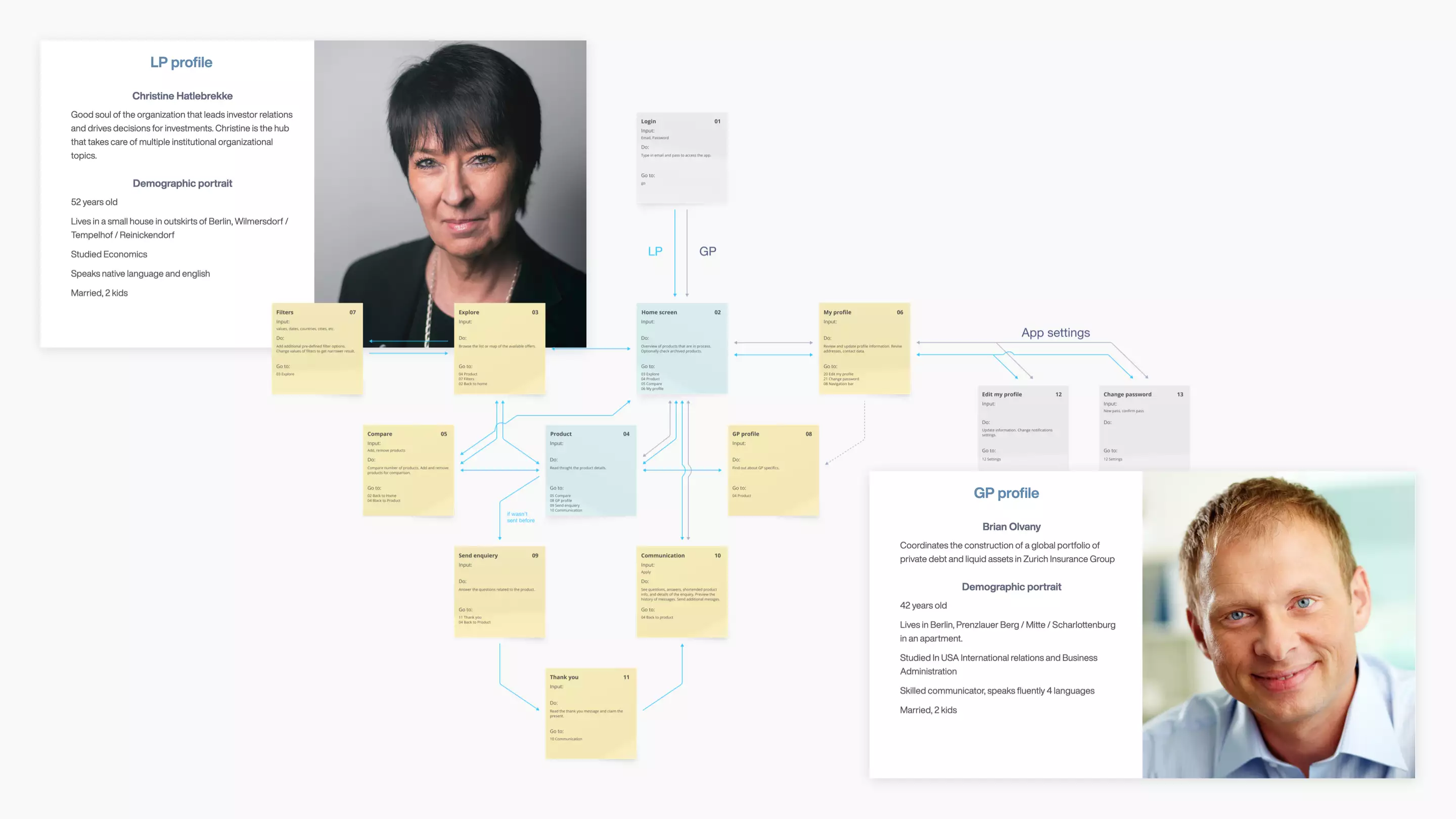
The discovery phase focused on reviewing existing financial platforms understanding common usability issues. Core topic was to identify and profile main users: Local Partner (LP) and Global Partner (GP). Many tools rely on dense layouts, complex navigation, and biased presentation that slow down evaluation and reduce trust.
User insights showed that institutional finance professionals often resist new products due to adoption friction, unclear benefits, and uncertainty compared to established offline processes. Two user flows were iterated to balance shared data access with clearly separated responsibilities.
Prototyping
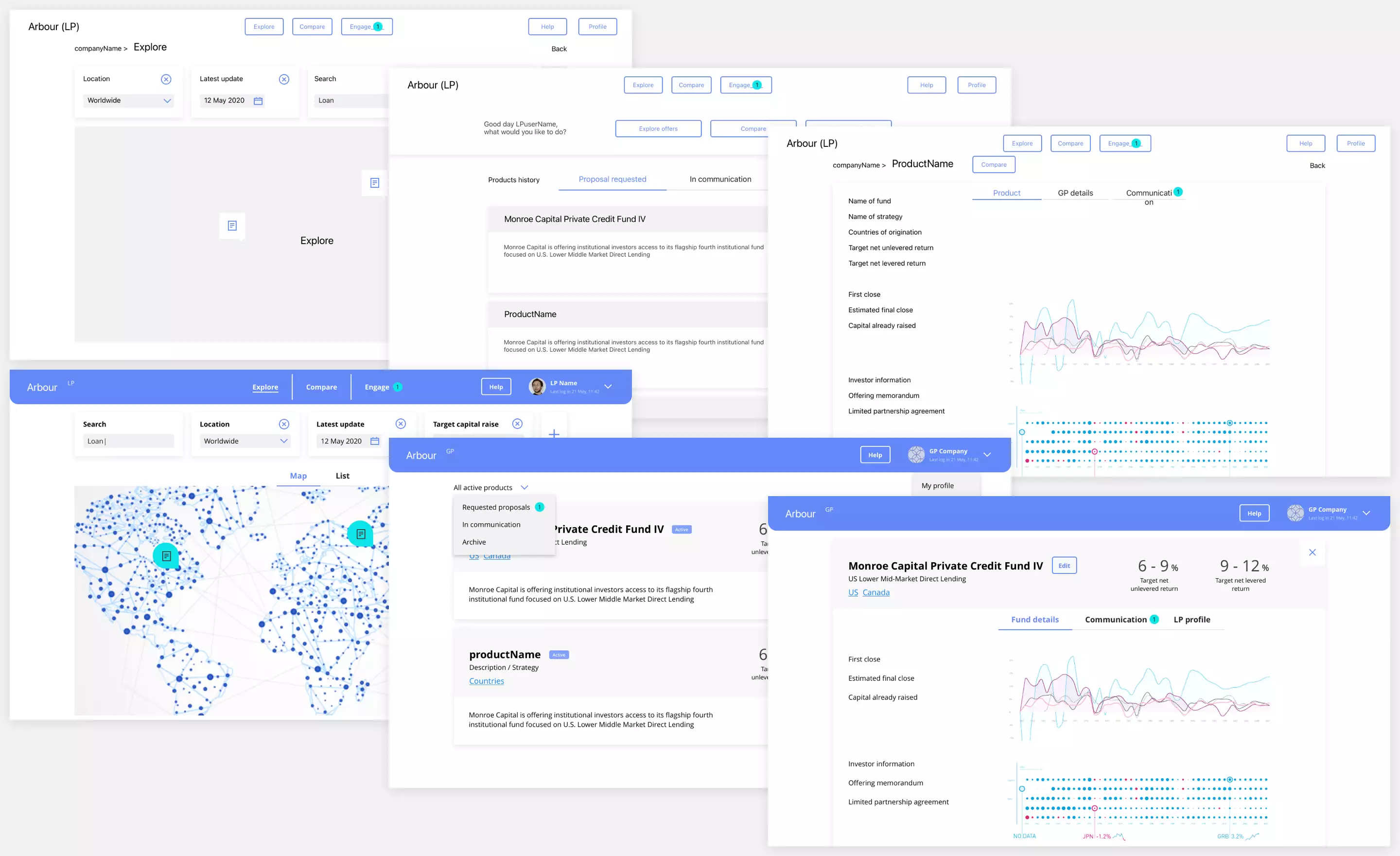
Prototyping defined the core structure of the application, including dashboards, exploration views, comparison states, and communication flows. The layouts focused on hierarchy, readability, and predictable interactions.
Two early iterations were used to validate structure and flow logic. A third iteration consolidated feedback and delivered a coherent prototype ready for alignment across product and engineering teams. The interface evolved from visual exploration into a consistent and reliable design with a minimal design system.
Visual Design
Visual design that builds confidence
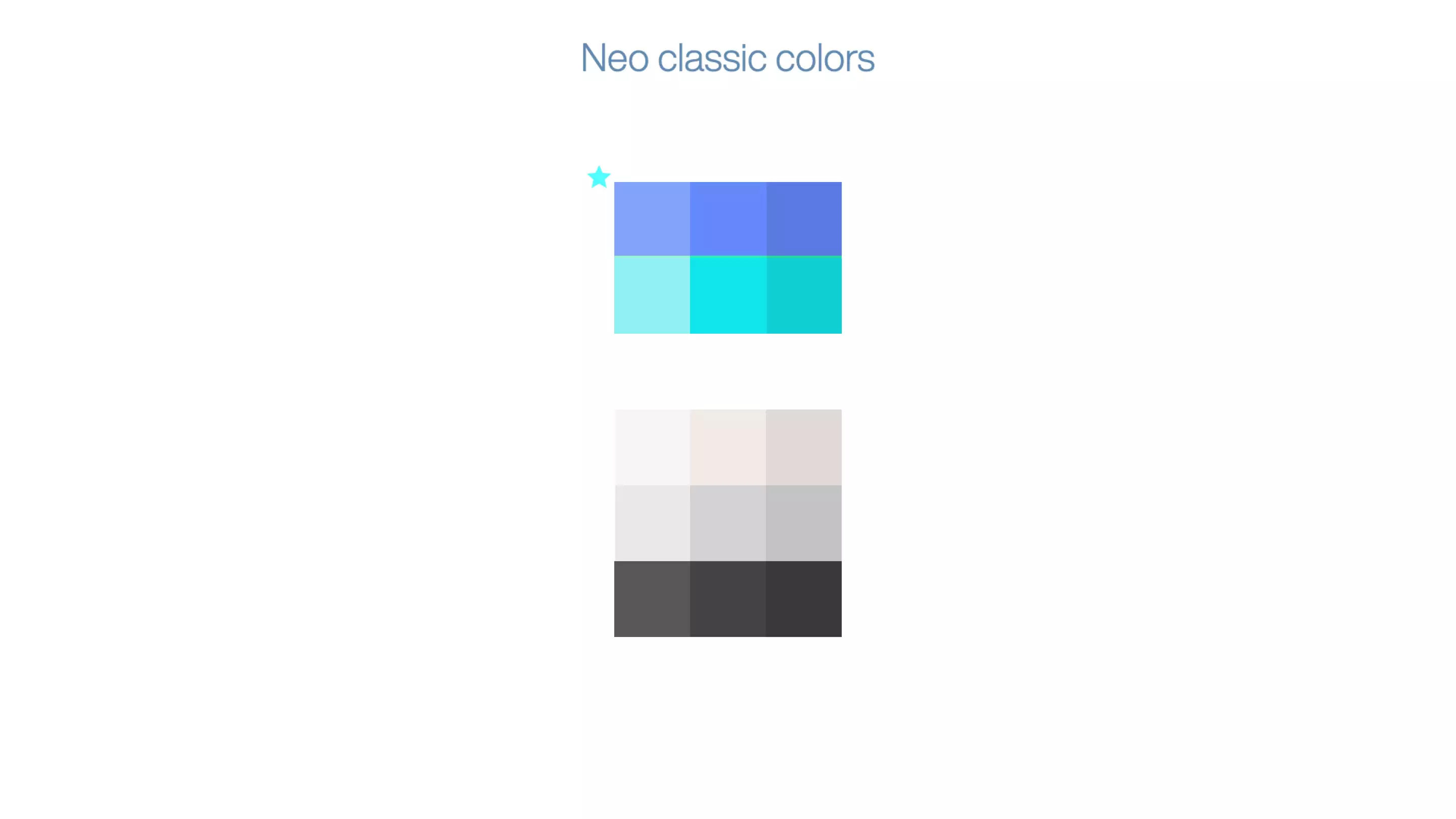
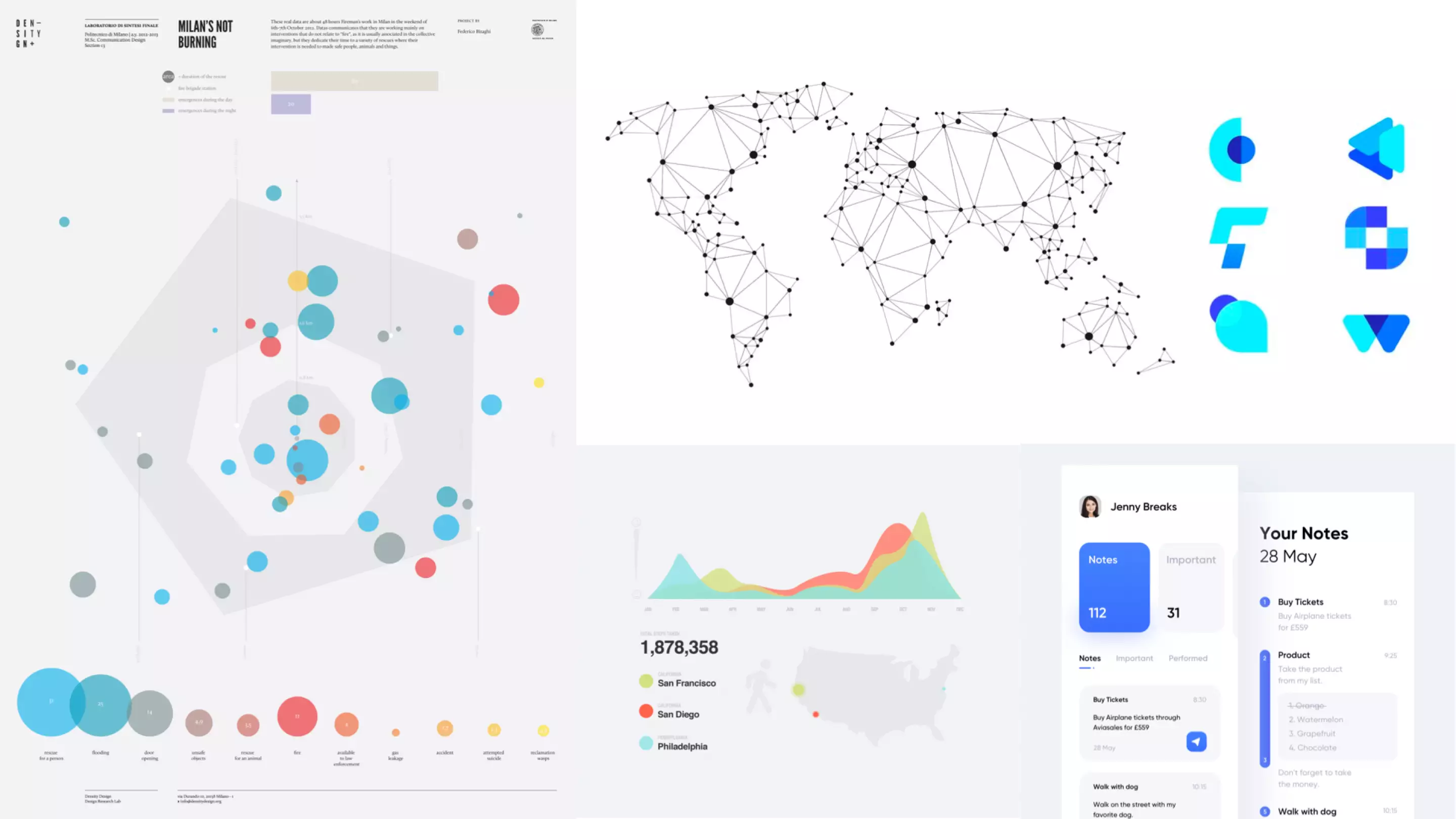
Exploring a Neo Classic interface style
The option based on structured layouts, sharp and edgy line work, restrained shapes, and financial inforgraphics to create a composed, reliable, and timeless interface appearance.
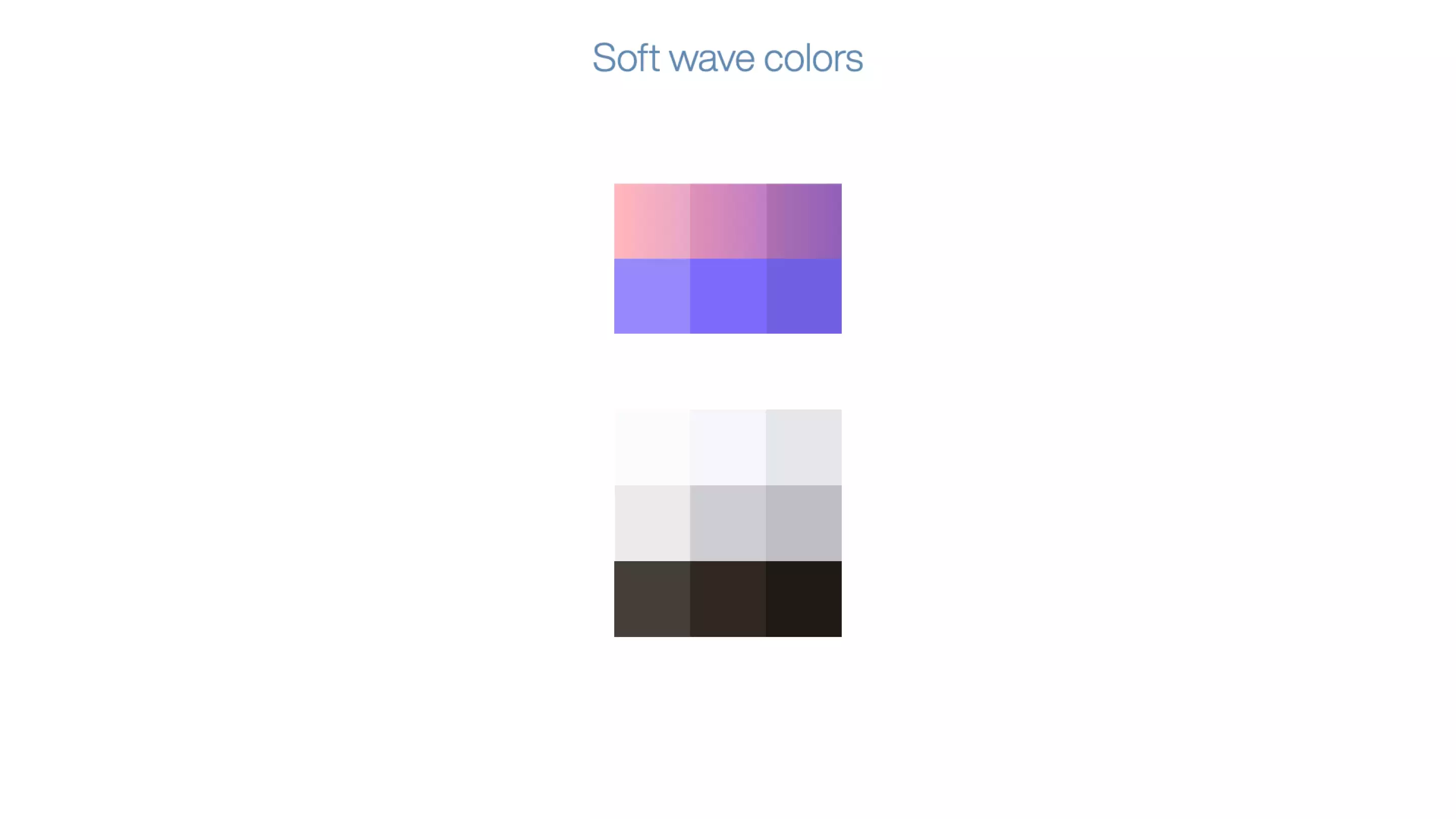
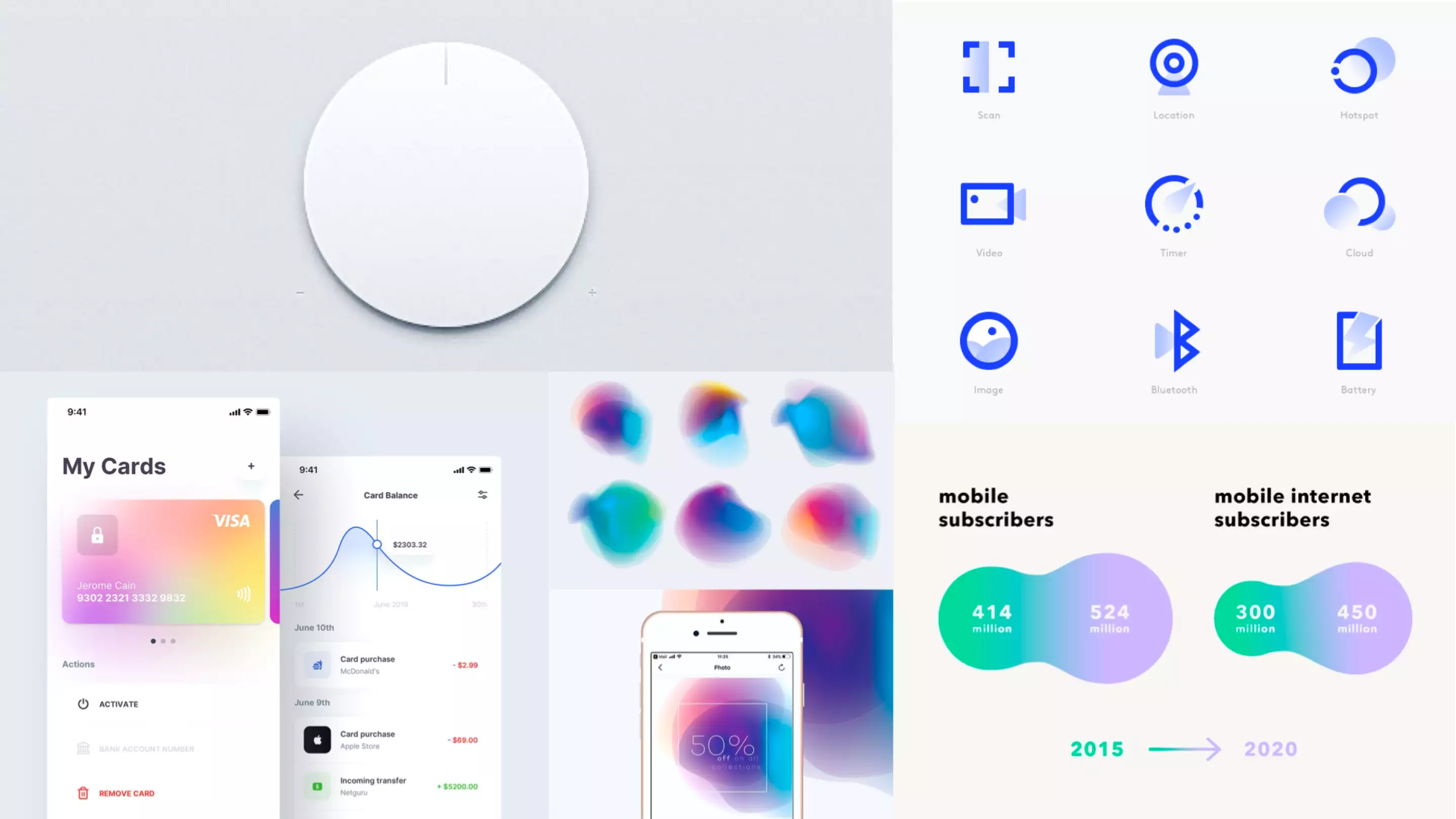
Exploring a Soft Wave interface style
The option introduced gentle line work, soft color transitions, shades and visual depth, adding warmth and approachability while preserving clarity and professional credibility.
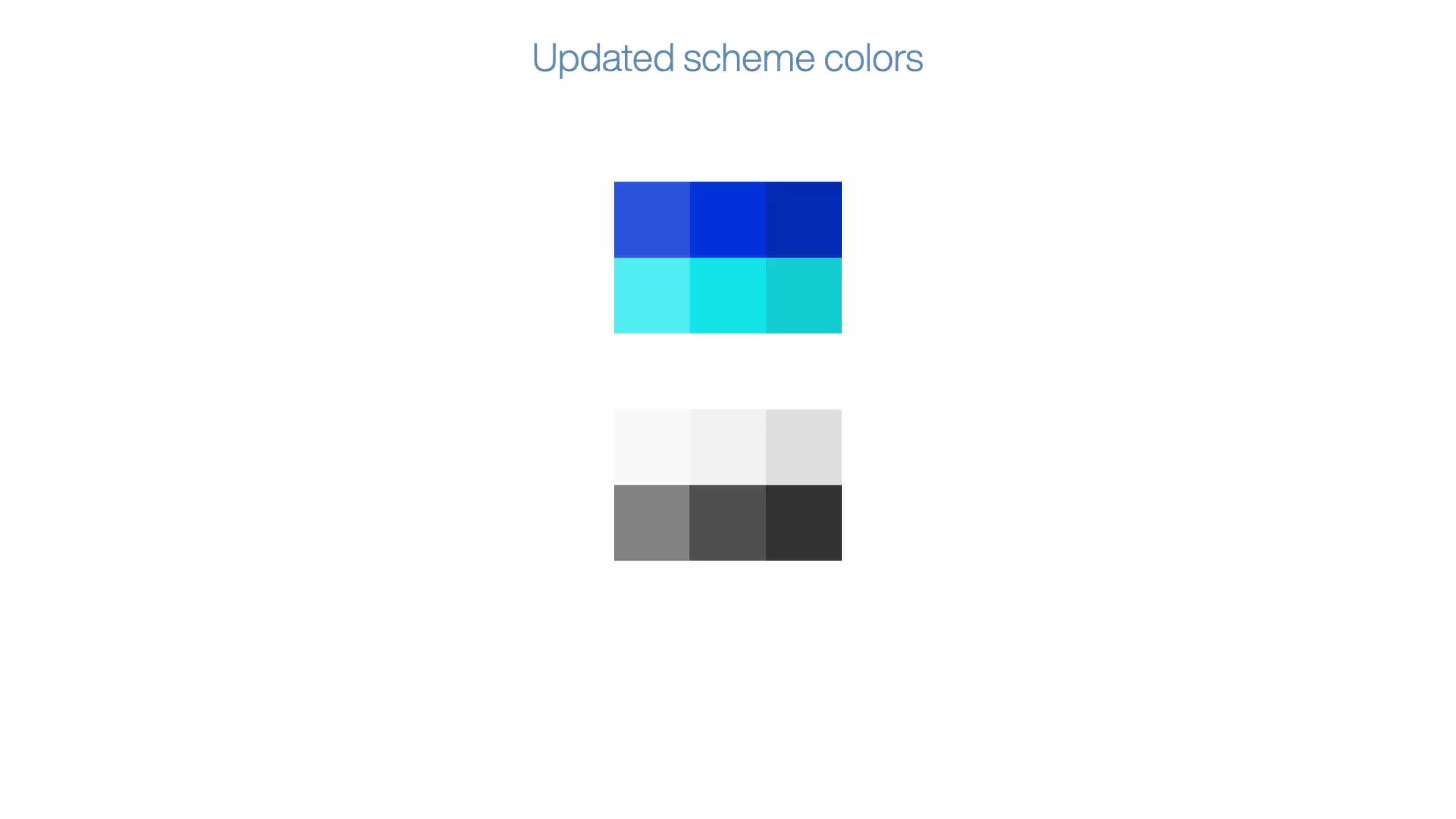
Refining the interface based on brand guidelines
Based on the explorations, an external agency developed the corporate identity and brand guidelines. The interface was then refined to align with the corporate guideline DSMR. The updated interface color scheme introdced more vivid colors.
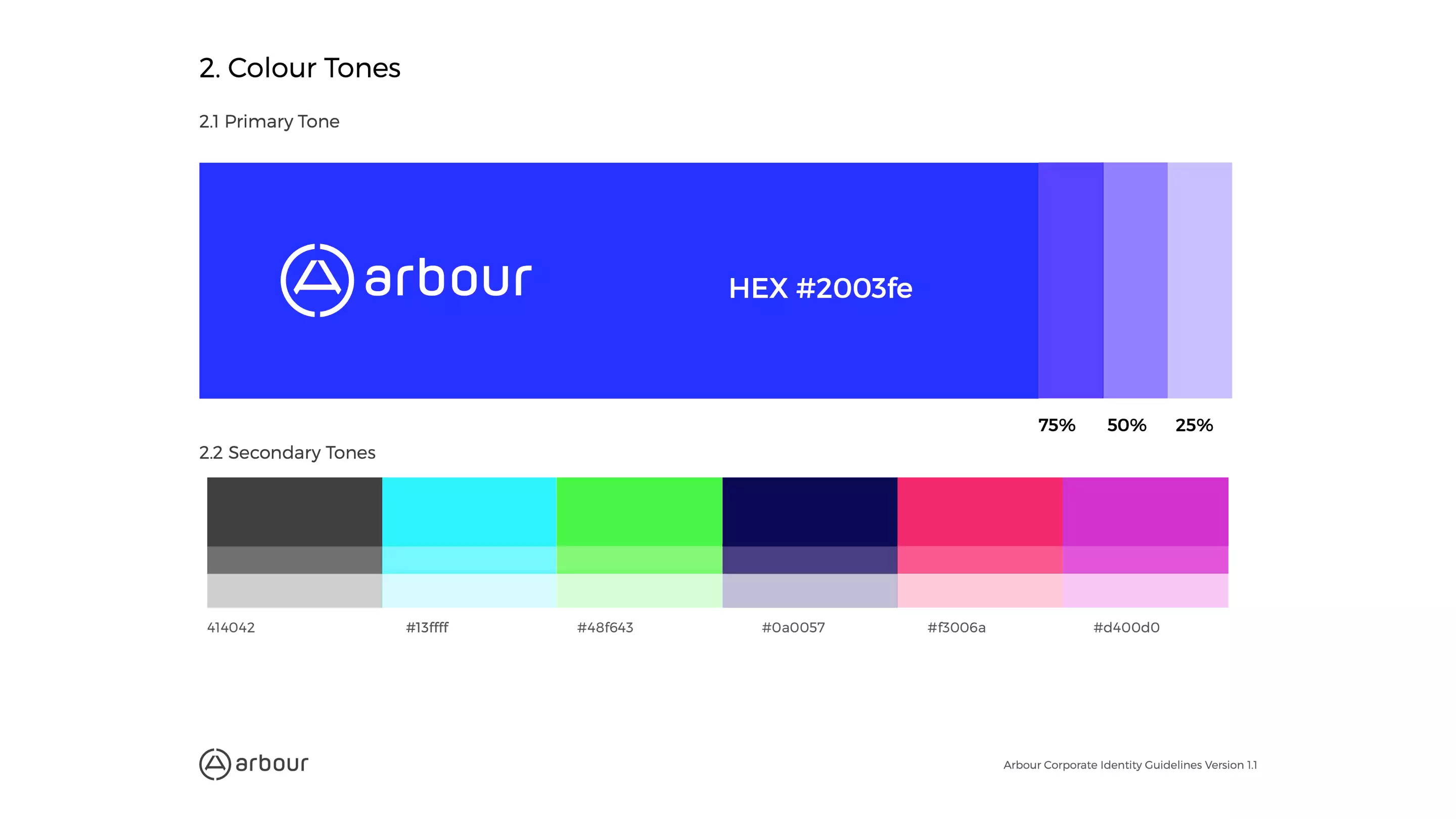
Color scheme & elements design
Refined Neo Classic design supporting clarity across distinct investment roles
The final design reflects two differentiated user perspectives. General Partner views present the portfolio manager experience, focused on presenting products, managing visibility, and guiding engagement.
Local Partner interface views show the institutional investor experience, optimized for structured exploration, careful comparison, and confident decision making across complex financial information.
Key design decisions consistently prioritized clear information over decoration. The refined Neo Classic language supports hierarchy and readability, ensuring the interface feels trustworthy, composed, and suitable for high responsibility use.
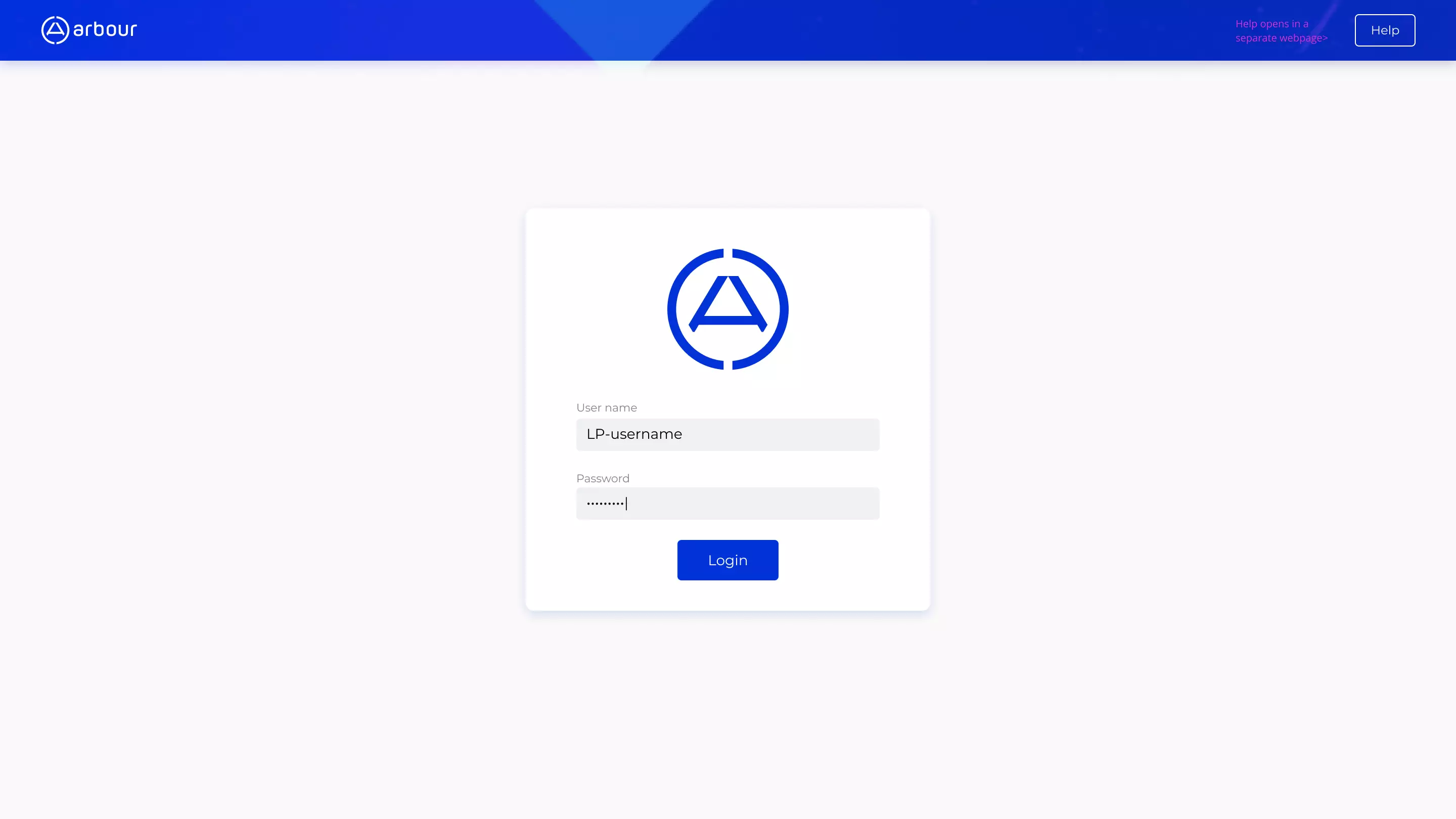
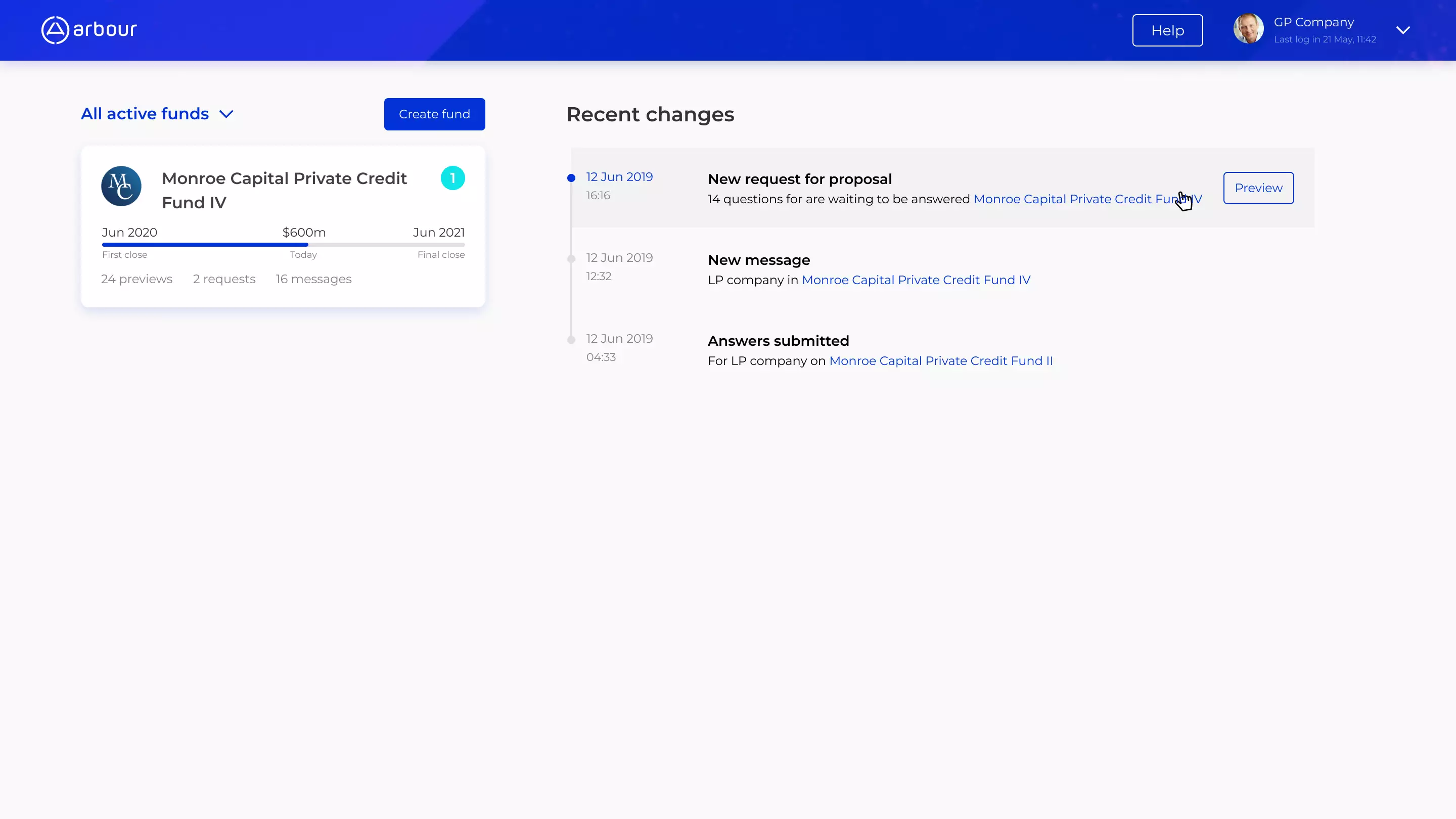
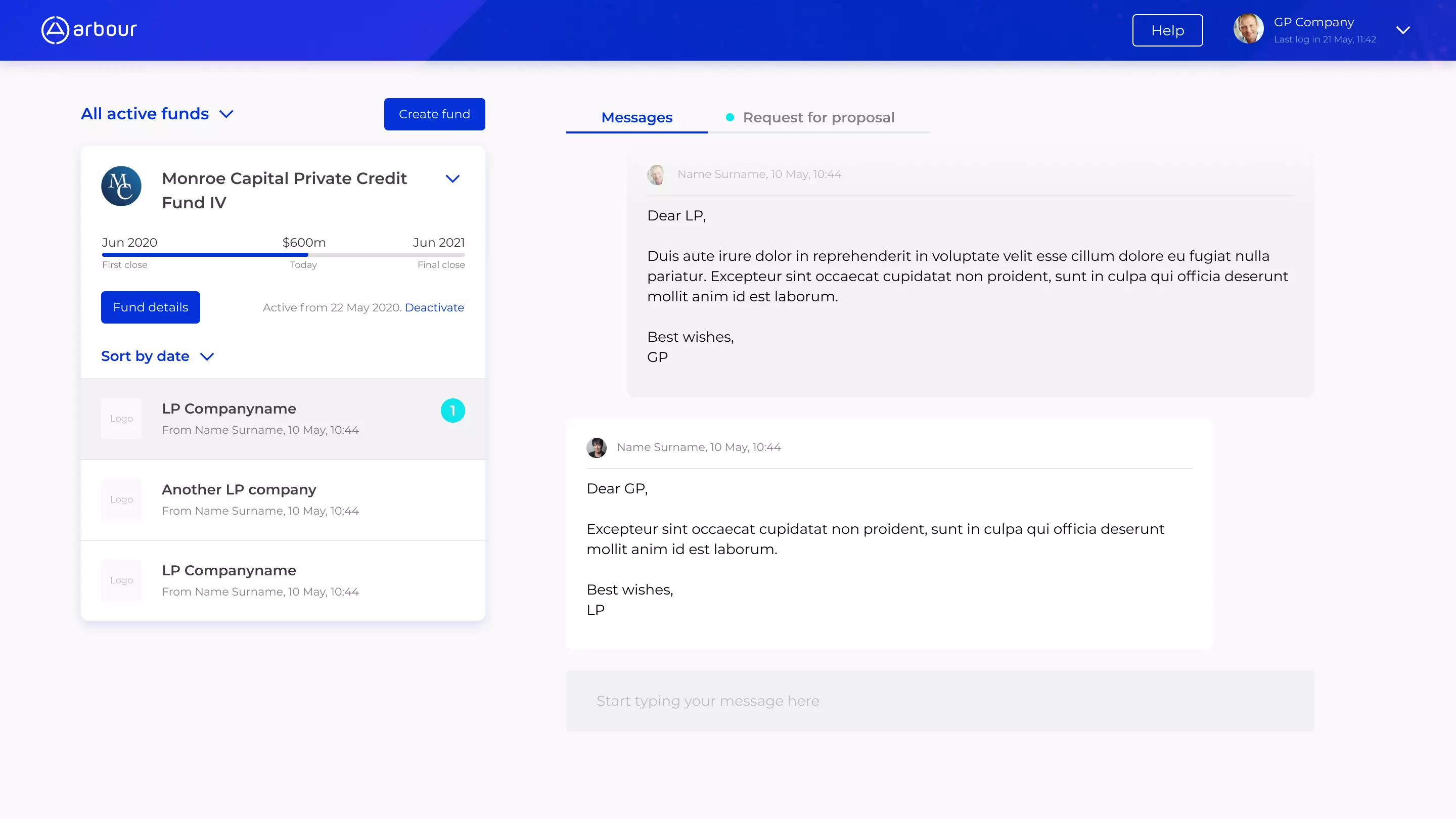
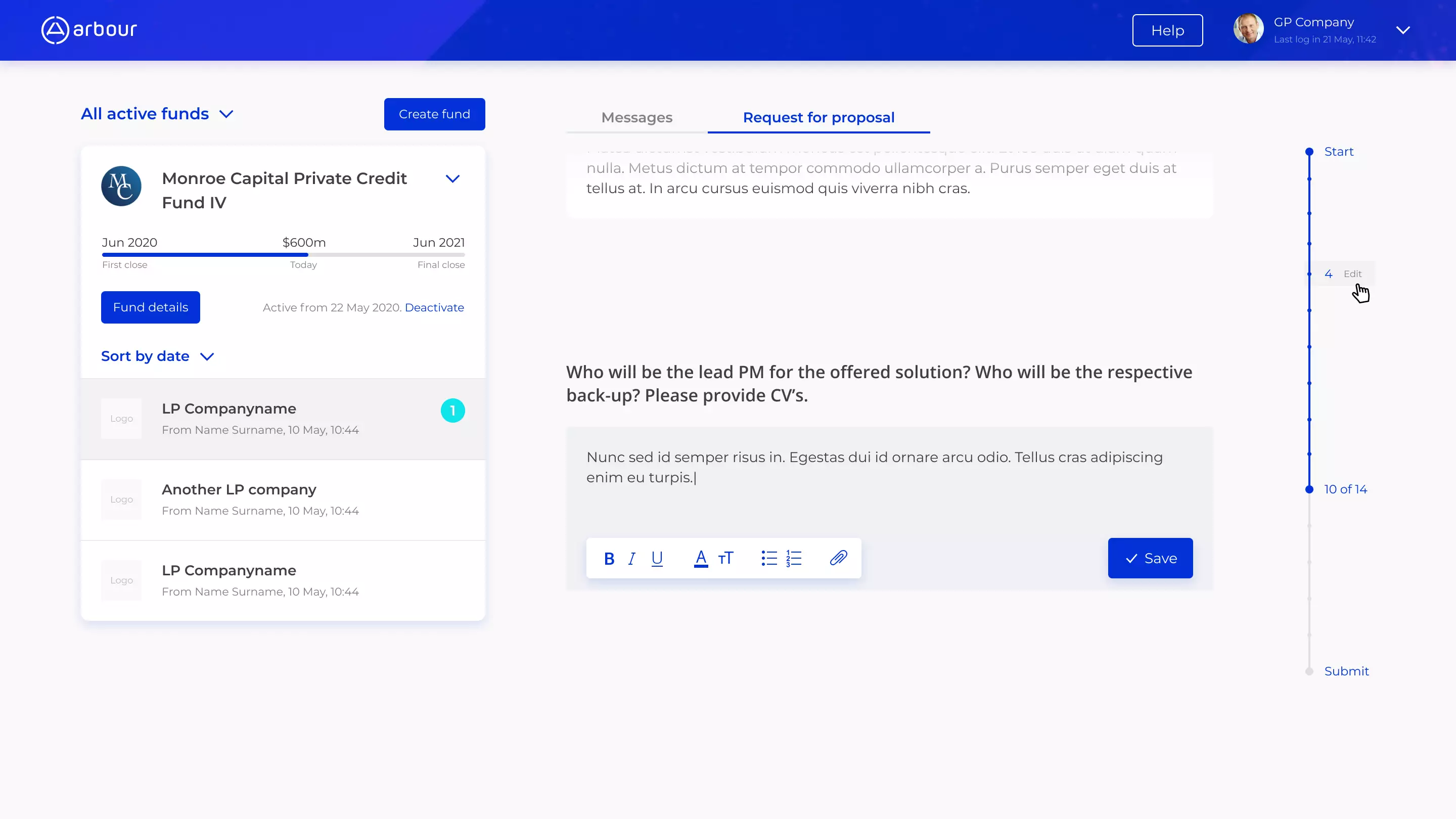
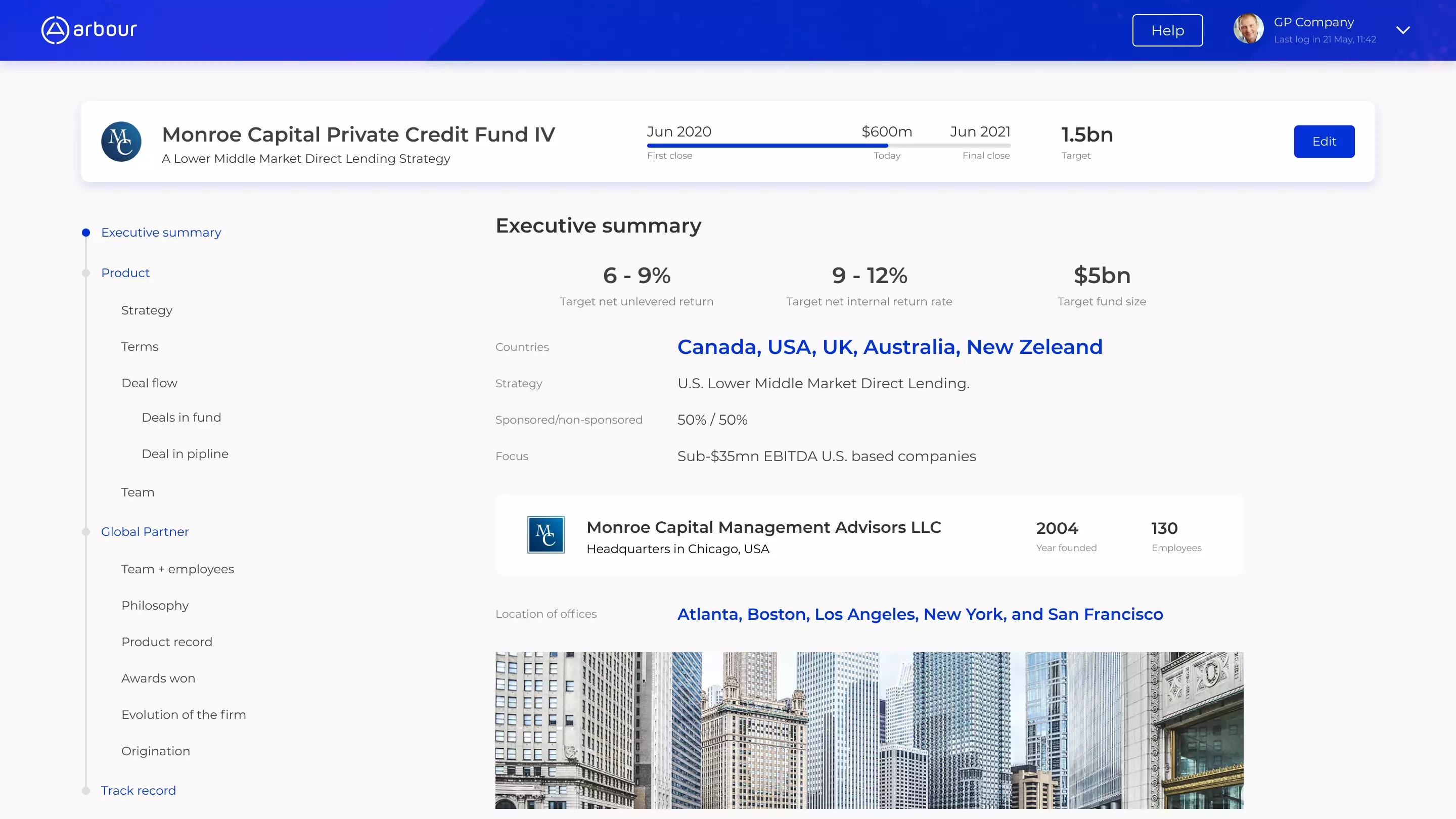
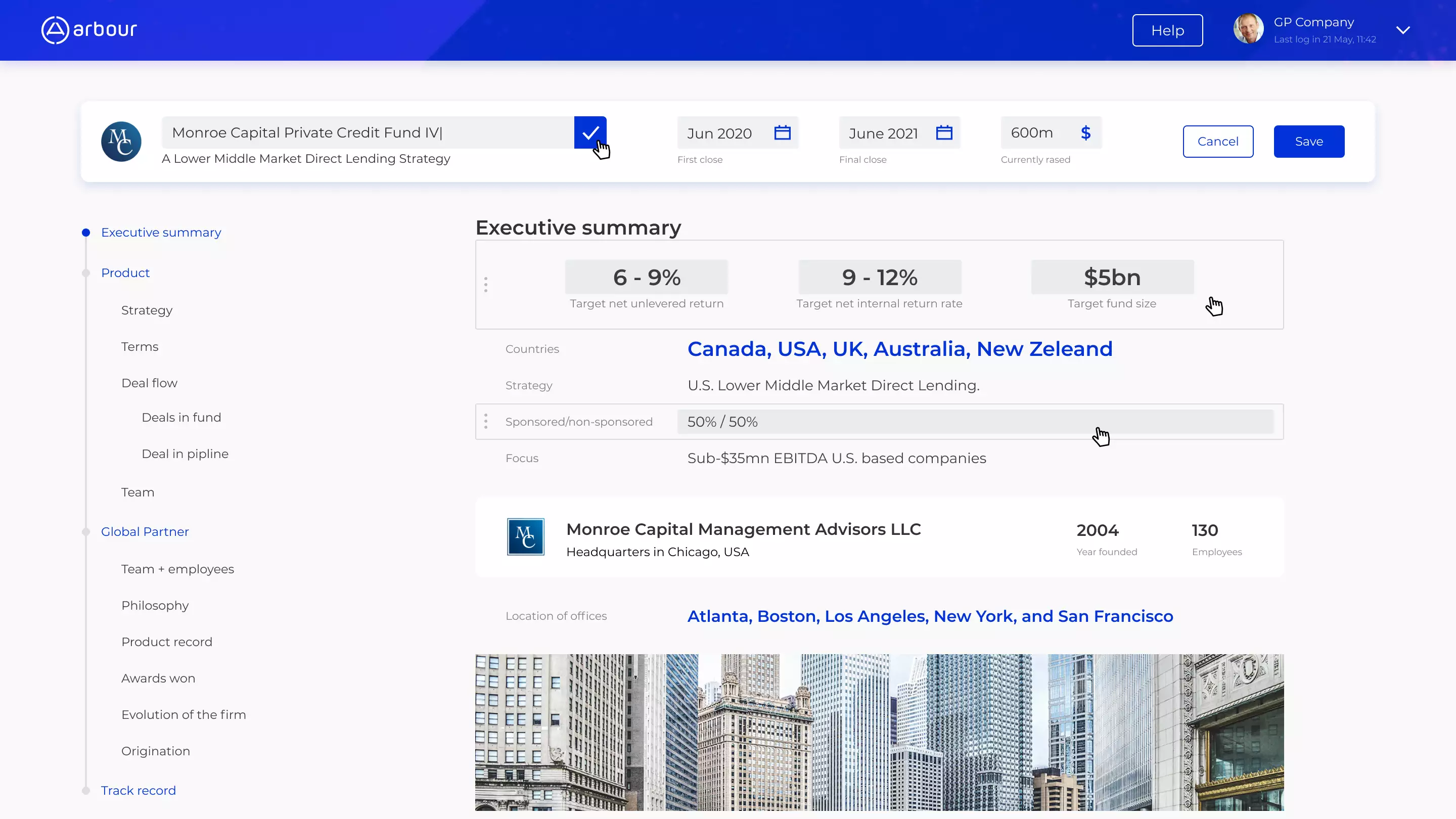
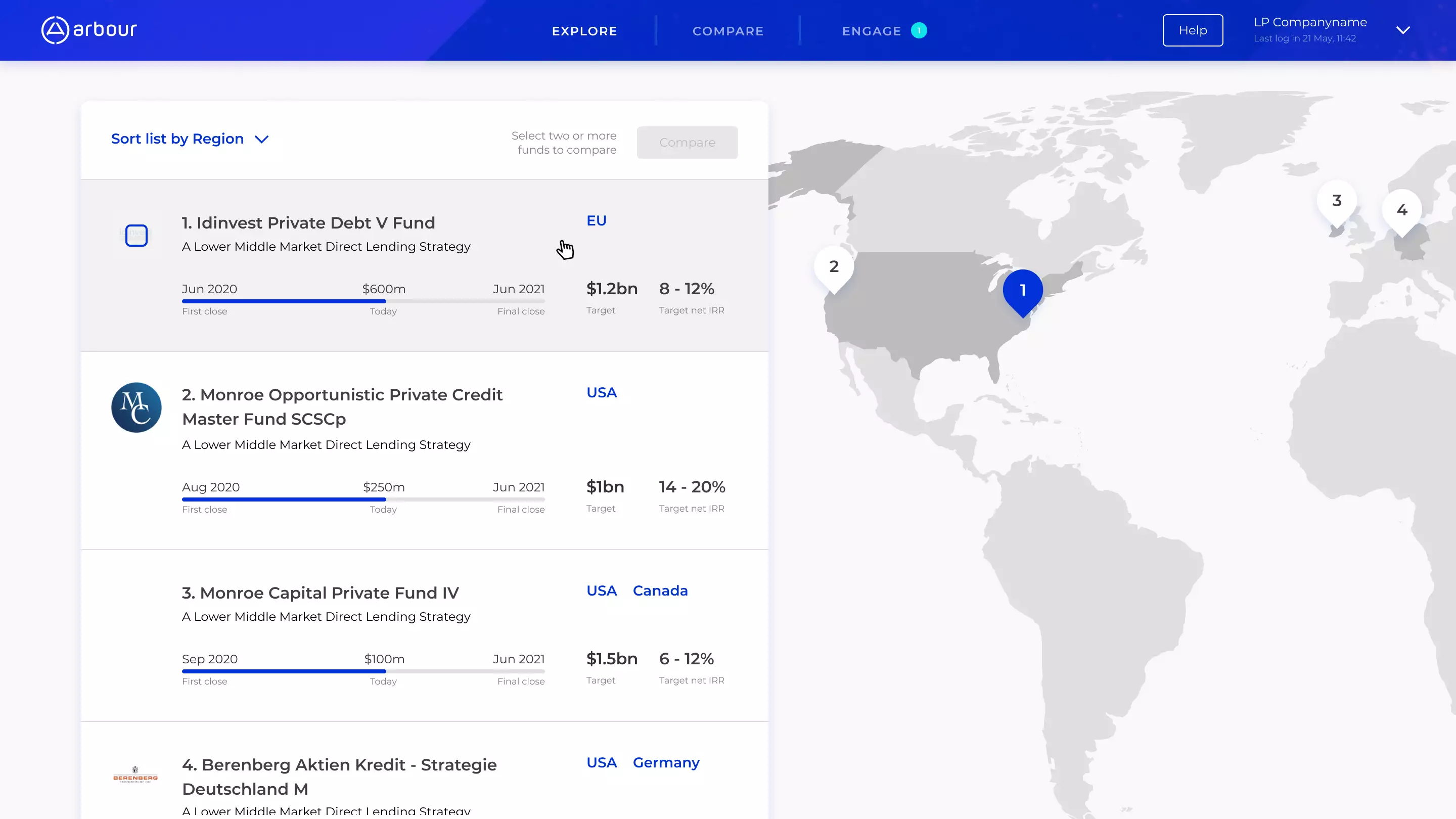
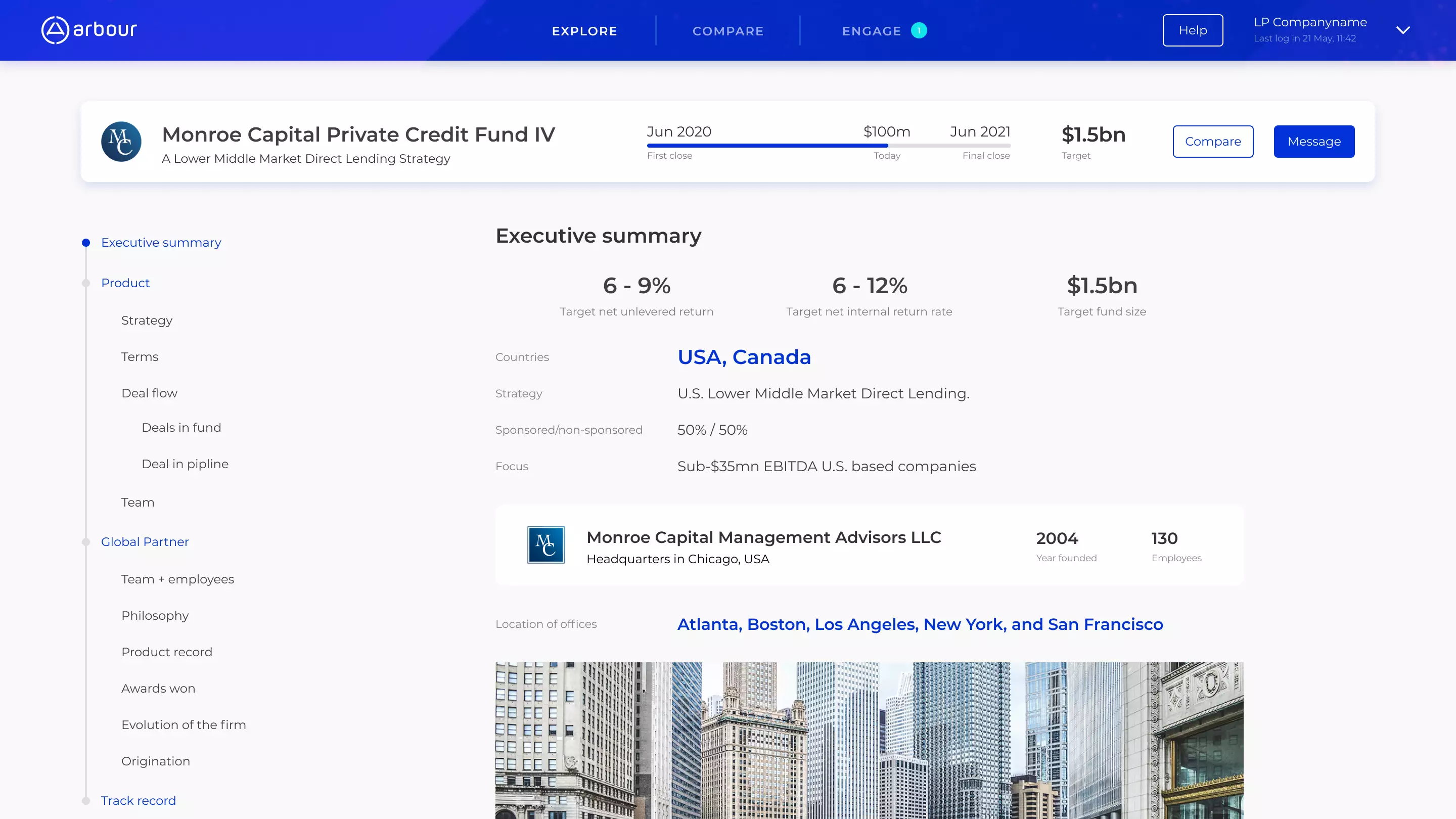
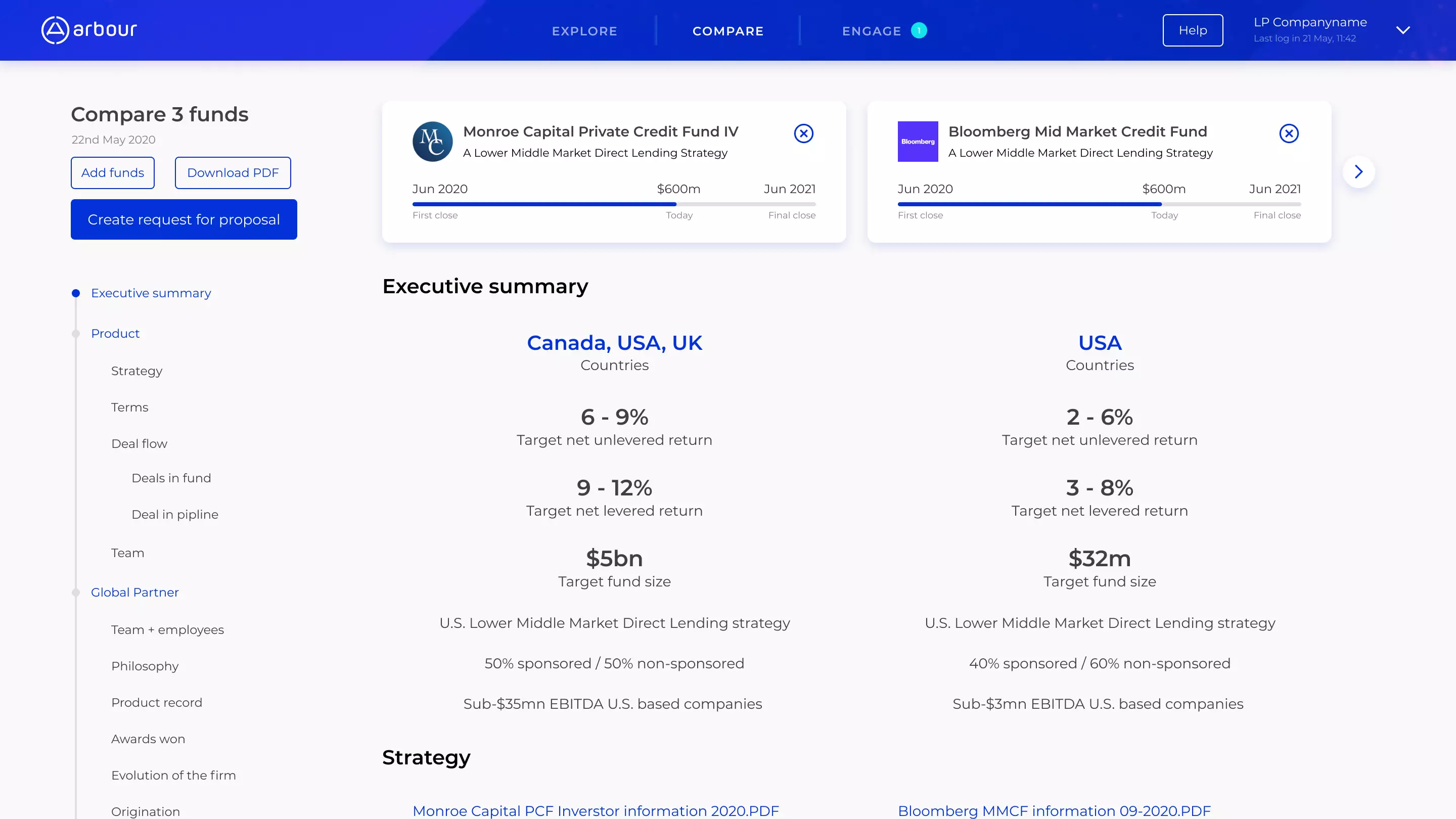
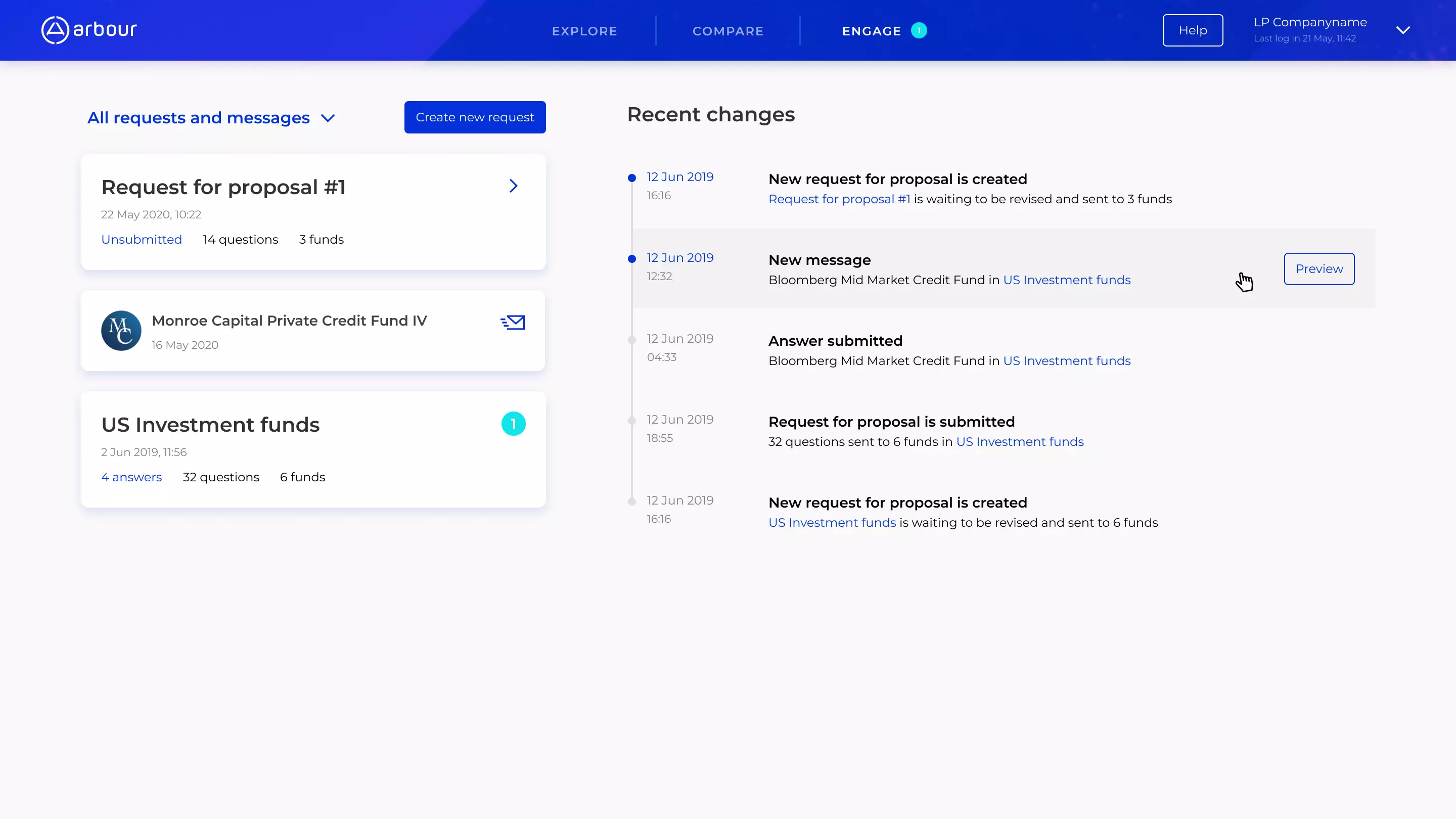
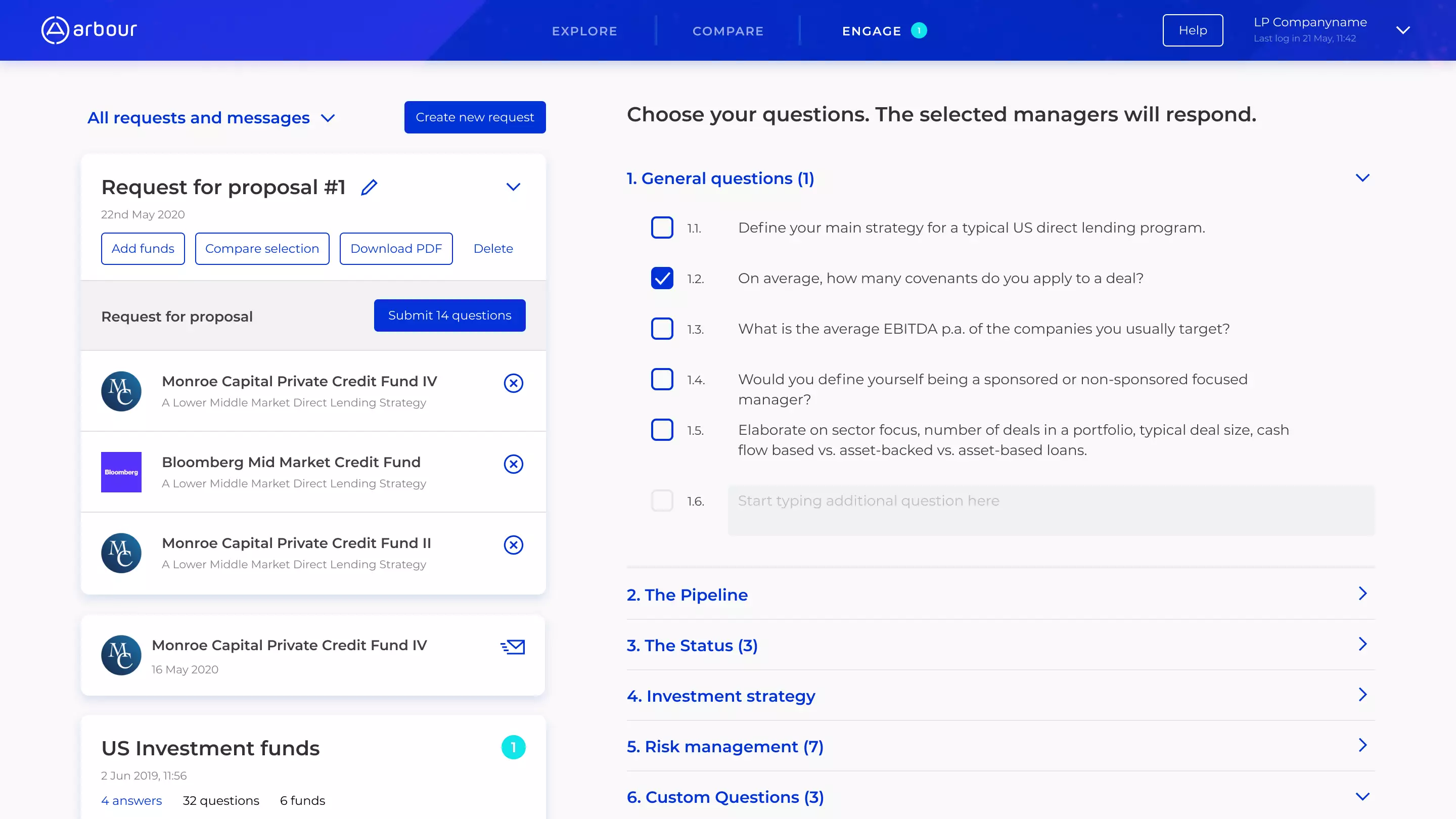
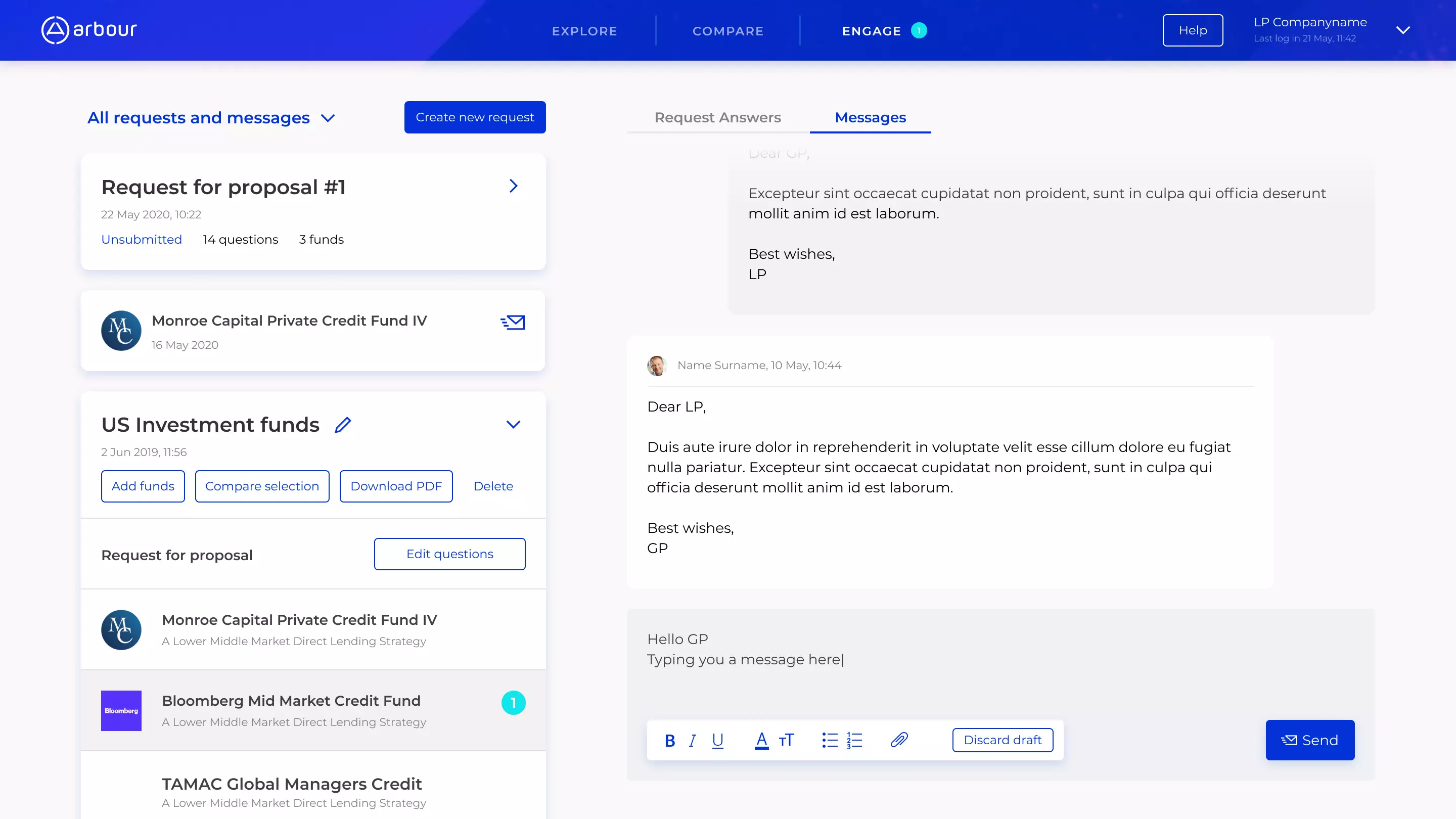
Final design
Working on Arbour provided deep exposure to the financial investment ecosystem and its specific terminology. Designing for this domain required precision, neutrality, and a strong focus on trust.
The project reinforced the importance of clarity when dealing with complex data and high responsibility decisions. It also highlighted how thoughtful design can support adoption in traditionally conservative environments.
Till Tolksdorf
Design Studio Maurice Redmond