Cross-Section Design Method
Cross-Section Design is a methodology merges business logic, market context, and technical constraints with conceptual freedom to deliver coherent, high-impact results. Instead of treating design as a cosmetic layer added at the final stage to "patch holes," the Cross-Section method views a product as a living system of interconnected parts.
I developed and practice the approach to solve a critical industry failure: tunnel vision and product design in a vacuum. By simultaneously aligning business goals, user requirements, and creative experimentation, I ensure that every solution is not only grounded in functional reality but is also scalable, future-proof, and truly innovative.
By implementing this methodology from day one, I eliminate the strategic "blind spots" that often derail complex products.
Current practice
The pitfalls of traditional UX/UI practice
In my experience, projects typically struggle when design is treated as an isolated silo rather than an integrated system. These "blind spots" usually manifest in three destructive ways:
The "Pure Creative" vacuum
Design that leans heavily on user desires while ignoring business viability. This results in beautiful, empathetic solutions that are strategically ungrounded and fail to drive revenue or growth.The "dark pattern" trap
When the process is overly driven by aggressive business KPIs, design is often weaponized. This leads to manipulative "dark patterns" that sacrifice long-term user trust for short-term metrics.Ceremonial design
A superficial approach where design is merely a "final coat of paint." These solutions are often technically impossible to build or functionally hollow because the "plumbing" of the product was never considered.
Structured approach
The solution is the multidimensional framework
The core of the approach is to establish a clear product philosophy and align every design phase with it. Rather than examining requirements in a sequence, which often leads to late-stage friction and patchwork cycles, I map the product across multiple points simultaneously.
The approach is deliberately pragmatic producing the necessary balance. Methods are chosen for effectiveness rather than ceremony, allowing teams to move quickly without losing depth.
Agile Evolution within Lean UX
This framework integrates well within the LEAN UX cycle, where iteration is fueled by evidence rather than ego. While the core philosophy remains the anchor of the project, the tactical details evolve as we uncover new data.
Practical application
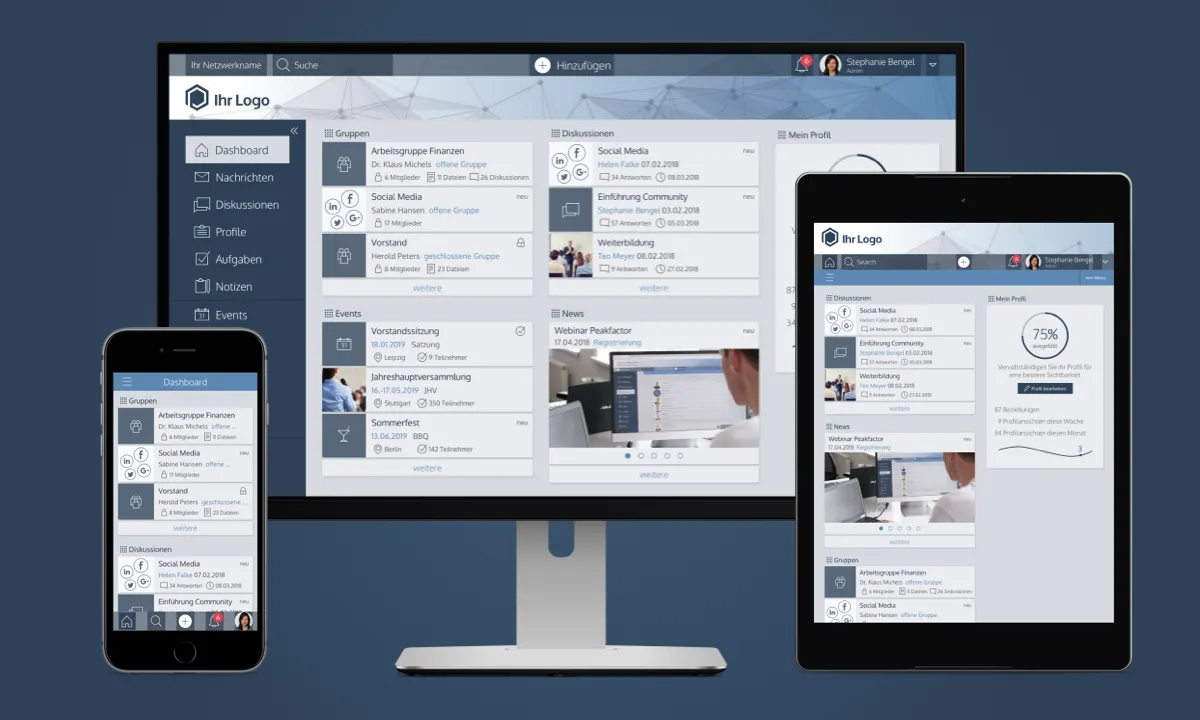
Case study: Peakfactor social intranet
The primary challenge was balancing a complex, high-density database architecture with an intuitive, social-led user experience. By applying the Cross-Section Methodology, I worked alongside a team of highly skilled professionals to navigate the tension between technical performance and human-centric design.
Ethical design
In collaboration with the product leadership, we rejected the "attention economy" model. Unlike platforms that use dark patterns to maximize "time on site," our philosophy for Peakfactor was to optimize for efficiency.
I designed the system to reduce cognitive load, ensuring we respected the user’s time.
Business goals
To move beyond ceremonial design, I collaborated with the team to map the intricate relationships between all platform stakeholders.
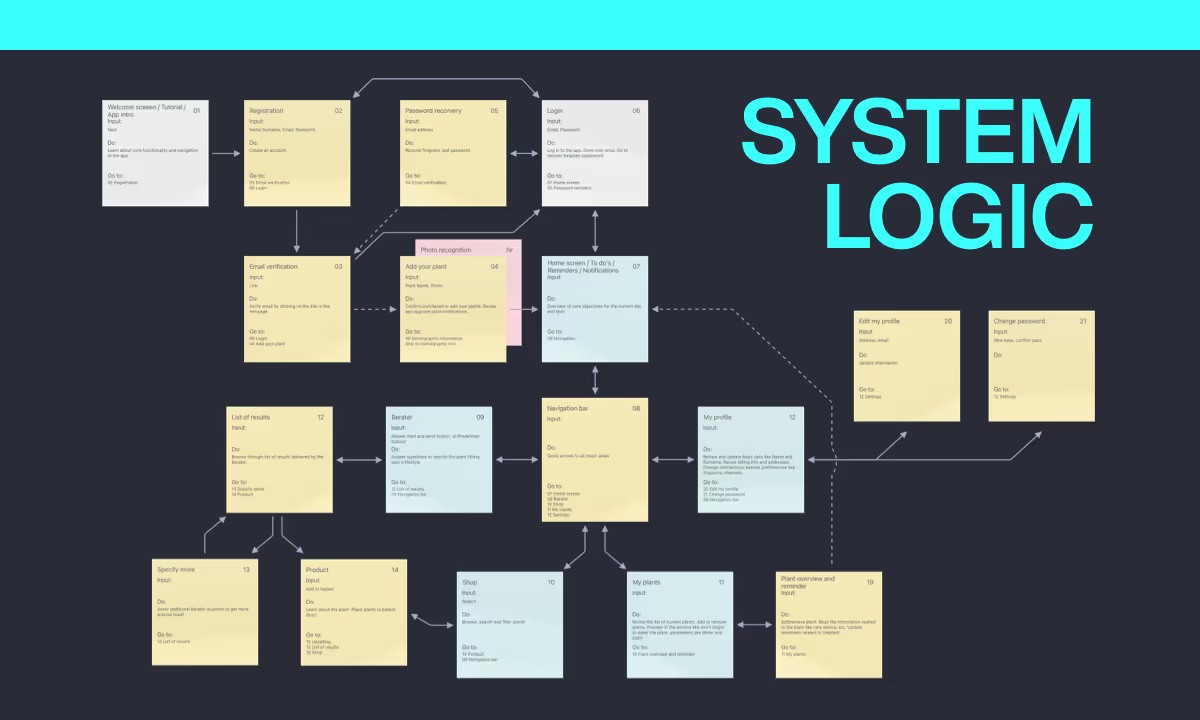
The clear strategy allowed me to define a concrete system that supports deep organization-level customization without compromising user experience.
Informed creation
Through what I call "Creative Correctness," I ensured that experimentations were anchored in functional reality.
I made sure every aesthetic choice was a calculated decision that supported the product's underlying logic.
Cross-Section Methodology applied to bridge complex business needs with the user-centric approach.
The project demonstrates grounded, highly custimizable design across both mobile and web ecosystems.