Lean UX Flow
My design approach is centered around learning through action. Instead of relying on extensive upfront specifications, design decisions evolve through small experiments, early feedback, and continuous adjustment.
For over 10 years, I’ve refined the six-stage methodology to ensure that every step serves a business goal and every interaction solves a human need with the focus is on reducing uncertainty. By validating assumptions early through flow modeling, wireframing, advanced prototyping design becomes a tool for informed decision making rather than a late-stage refinement step.
1. Research
Setting the foundation
The Goal: De-risking the project by replacing assumptions with evidence.
1.1. Strategic onboarding
I lead intensive workshops to align business objectives with technical constraints. We define the roadmap and actionable tasks early, ensuring the design process is anchored in reality, not just aesthetics.
1.2. Heuristic evaluation
I audit existing interfaces against industry-standard usability principles. I look for "friction points" in navigation and information architecture to identify immediate opportunities for improvement.
1.3. User research & persona definition
Moving beyond surface-level demographics, I conduct anthropological interviews to uncover user mental models. This ensures we aren't just building a product, but a solution that fits into the user's daily life.
2. Analysis
Distilling the data
The Goal: Turning raw information into a clear design strategy.
2.1. Constraint mapping
Every project has limitations: technical, budgetary, and regulatory. I analyze these early, ensuring the creative vision is actually buildable.
2.2. Fail-point analysis
By analyzing competitor failures and user test results, I identify potential pitfalls before the design phase begins. I extract "actionable truths" that guide the ideation process.
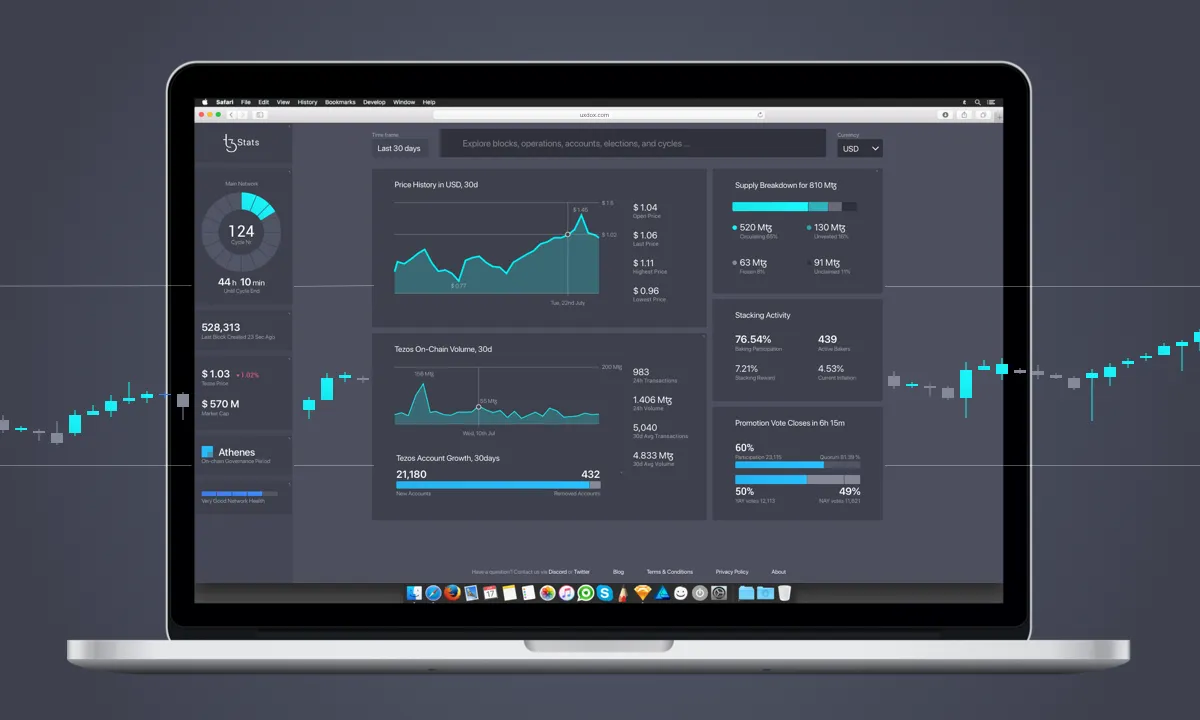
See discovery analizys in action. For the project I mapped diverse behavioral profiles to identify "Fund Manager" as the primary archetype.
By prioritizing their specific requirements for financial readability over raw blockchain data, we produced the interface to reduce learning curve.
3. Ideation
Information architecture
The Goal: Solving the logic of the product before defining the look.
3.1. Visual strategy
I curate a "visual language" that goes beyond mood boards. I define the mood, color theory, and styling language that communicates brand’s personality and builds trust with the audience defined at the research phase.
3.2. Flow modeling & logic
Using low-fidelity wireframes, I map out the user’s journey. This allows us to test the "logic" of the product rapidly and make structural changes without the cost of high-fidelity rework.
3.3. Advanced prototyping
I build high-fidelity, interactive prototypes using dedicated apps like Figma, Sketch, Webflow or directly in HTML for quick tests in web-based environments.
4. Design
Precision & scalability
The Goal: Crafting a high-end, scalable interface.
4.1. UI & atomic design
I build interfaces often relaying on the Atomic Design system. This means I create a library of reusable components that allow the product to grow and scale effortlessly without losing visual consistency.
4.2. Multi-Platform Adaptation
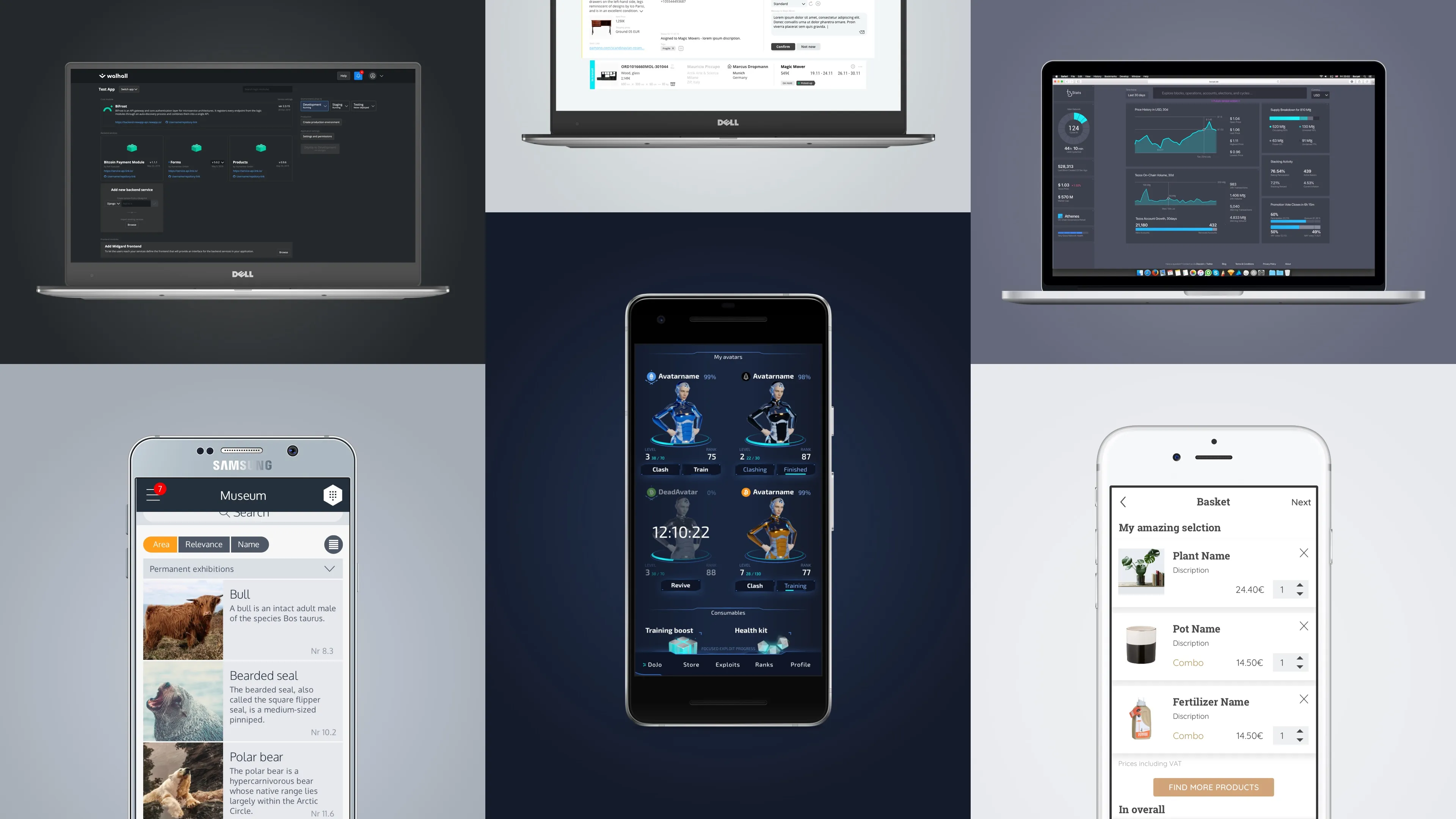
I ensure a seamless experience across Mobile, Tablet, and Desktop, focusing on "affordance" while making sure every button and gesture feels natural to the user on their specific device.
4.3. Specialized Interfaces
Whether it’s voice-activated UI (VUI) or complex data dashboards, I design for the most efficient interaction method, ensuring privacy and accessibility are never an afterthought.
5. Testing
The reality check
The Goal: Validating the design with real humans or aliens. ;)
5.1. Rapid validation
I conduct "reality check" sessions to ensure we are moving in the right direction. This prevents "design vacuum" where the team loses touch with the end user.
5.2. Deep anthropological testing
For complex systems like in Healthcare or Fintech, I lead deep-dive testing rounds. I collect and analyze qualitative feedback to turn "I don't like this" into "Here is the specific functional improvement needed."
6. Delivery
Bridging design & code
The Goal: Ensuring the final product looks and feels exactly as intended.
6.1. Precision handover
I provide a comprehensive Design System, complete with annotations, interaction guides, references, and asset libraries that make the developer’s job straightforward.
6.2. Active development support
I stay involved during the build phase. I work alongside the engineering, QA and product owner to clarify behaviors, troubleshoot edge cases, and fine-tune animations.