Expertise

From concept to reality

My expertise is rooted in the rigorous discipline of Industrial Design, where usability isn’t just a preference, it’s a physical requirement. I’ve spent over a decade translating those principles of ergonomics and durability into the digital space. Today, I help startups, entrepreneurs and companies move beyond aesthetics to build high-performance systems that are strategically grounded and technically feasible.

Product strategy

I bridge the gap between business goals and user needs. By facilitating discovery workshops, I help define the roadmap and ensure the information architecture solves the right problems from day one.

User research

I replace assumptions with evidence. Using anthropological methods and stakeholder interviews, I uncover the mental models that drive user behavior and product adoption.

Interface design

I craft high-fidelity visuals that build trust. Beyond color and type, I develop a cohesive visual language that guides users instinctively through complex workflows.

Design Systems

I build the infrastructure for scale. I specialize in creating modular libraries and design governance rules that allow teams to grow the product without losing technical or visual consistency.

Interaction design

I focus on how a product moves and responds. By applying principles of digital ergonomics, I ensure that every gesture and transition feels natural, predictable, and fast.

Prototyping & testing

I create the "source of truth" before development starts. By building interactive click-dummies, I identify logic gaps and edge cases early, significantly reducing engineering rework.

Umbrella method

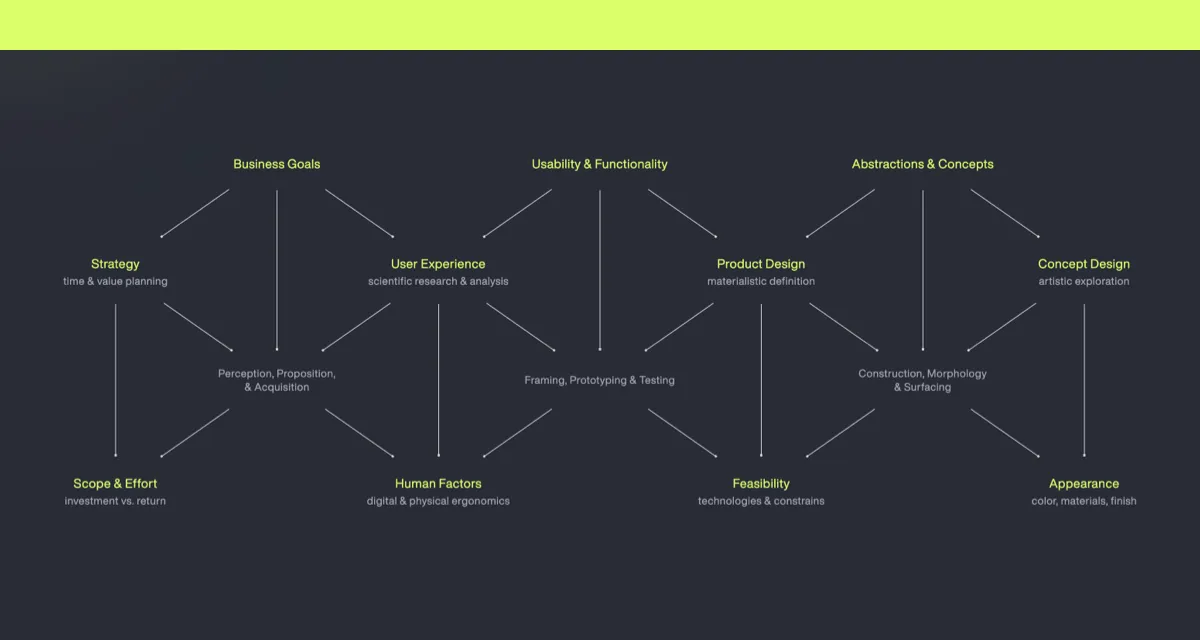
My approach to creative solutions is based on the Cross-Section Design methodology

I developed the Cross-Section method to eliminate the "strategic blind spots" that often derail digital products. By simultaneously analyzing business strategy, technical constraints, and human behavior, I ensure that the final result is a coherent, living system. This multidimensional approach allows me to navigate the tension between innovation and feasibility.
Learn about Cross-Section Design
Cross-Section diagram showing relationships among Business Goals, Usability & Functionality, and Abstractions & Concepts.

Hands-on process

I work inline with the iterative lean approach focused on learning and validation. I analyze outcomes, explore solution options, prototype assumptions, and validate decisions through user feedback and testing.

Embracing the structured, iterative lean design flow

Lean UX Process in details
  • Discovery & Stakeholder Alignment
    Anthropological study, qualitative research, persona definition, strategic onboarding, heuristic evaluation
    Every project begins with de-risking. The goal is to replace assumptions with evidence by aligning business objectives with technical constraints. I lead intensive workshops to define the product roadmap early, ensuring the design process is anchored in reality. By identifying "friction points" through heuristic audits and competitive mapping, I establish a solid strategic foundation before a single pixel is moved.
  • Analysis & Constraint Mapping
    Data distillation, technical feasibility, competitive gap analysis, fail-point analysis, feature prioritization
    To turn raw data into a clear strategy, I analyze the specific limitations of the project—be they technical, budgetary, or regulatory. This phase is about "disassembling" the problem to ensure the creative vision is actually buildable. I identify potential fail-points by analyzing competitor gaps, extracting "actionable truths" that guide the entire ideation phase toward a feasible, high-performance solution.
  • Information Architecture & Logic Modeling
    Information architecture (IA), customer journey mapping (CJM), sitemap development, mental model
    Before defining the "look," I solve the "logic." This stage is dedicated to architecting the paths users take to reach their goals. I create Customer Journey Maps and low-fidelity wireframes to test the product’s skeleton rapidly. By mapping information hierarchies and flows, I allow teams to make structural changes without the cost of high-fidelity rework, ensuring the final system is intuitive and frictionless.
  • Component Engineering & Precision UI
    Atomic design, digital ergonomics, visual language design, component libraries, scalable frameworks
    High-end interfaces must be both aesthetically pleasing and technically scalable. I craft visual languages that build trust, utilizing Atomic Design principles to create libraries of reusable components. This ensures your product can grow effortlessly across mobile and desktop without losing visual consistency. I focus on "digital ergonomics" building buttons, gestures, and layouts that feel natural and predictable to the user.
  • Usability Testing & Rapid Validation
    User testing, interactive prototypes, usability validation, iterative feedback loops, quantitative analysis
    I treat the design process as a "reality check." By building high-fidelity interactive prototypes, I observe real users interacting with the product to uncover usability friction. This stage is crucial for identifying edge cases and logic gaps before engineering begins. Whether through quick "gut-checks" or deep anthropological testing, I transform qualitative feedback into specific functional improvements.
  • Technical handover & implementation support
    Technical handover, implementation support, QA & edge-case reviews, Webflow development
    The process only ends when the product is live and pixel-perfect. I provide comprehensive Design Systems and interaction guides that make the developer’s job straightforward and error-free. My work continues into the build phase, where I collaborate closely with engineering teams to troubleshoot edge cases and fine-tune animations, ensuring the final product matches the intended vision exactly.
UX standards

The blueprint for clarity and scalability

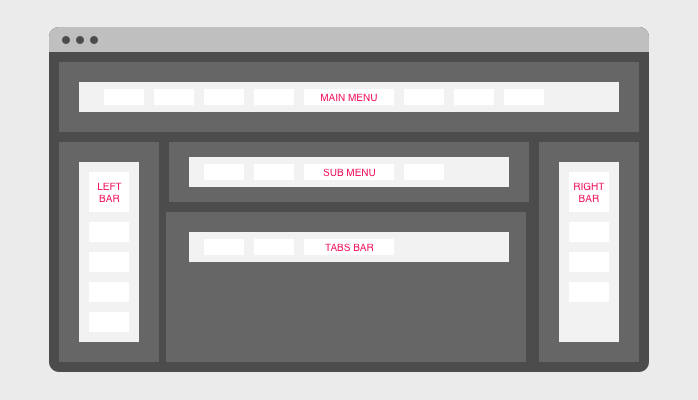
Standardization is the practice of introducing consistency and creative discipline into the design process. In User Experience, this means moving beyond individual "screens" to create a unified system of rules. By establishing internal standards, I ensure that products remain consistent, accessible, and easy to navigate, regardless of how much they grow or how many teams work on them.

Think of standardization as a process LEGO bricks creation. Instead of custom-molding a new shape for every feature, I develop a library of universal, interlocking components that ensure structural integrity across the entire product.

Reusability logic

Consistency
Standardized elements ensure that a button, navigation pattern, or feedback loop behaves the same way everywhere. This eliminates visual friction and builds immediate user trust through a familiar interface language.
Efficiency
By defining foundational blocks early, development cycles are significantly shortened. Teams can assemble complex features using pre-tested logic, allowing products and brands to scale seamlesly.
Predictability
A product that follows a logical system reduces the "cognitive load" on the user. When interactions are predictable, users move through flows faster and with higher confidence, leading to better retention and satisfaction.

Contact

Hi E,

I hope my message finds you well.
Best regards,
Done
I got your message. Let me get back to you in a bit.
Fail
Something went terribly wrong, please try again or use an email client.
Feels restricting? Try your email client.